




Elsa Cabrera, Executive Director, Centro de Conservación Cetacea
Always on the lookout for new ways to restart commercial whaling around the world, the Japanese government organized an event in October 2025 to promote whale meat as a healthy alternative to boost physical endurance, cognition, and concentration. Nine months later, the whaling industry is rolling out the same strategy, claiming that whales could help slow the effects of Parkinson’s disease.
On June 1, the Japanese health website Qlifepro announced that a compound found in whale meat, known as balenine, had been shown to reduce the progression of Parkinson’s symptoms in mice.
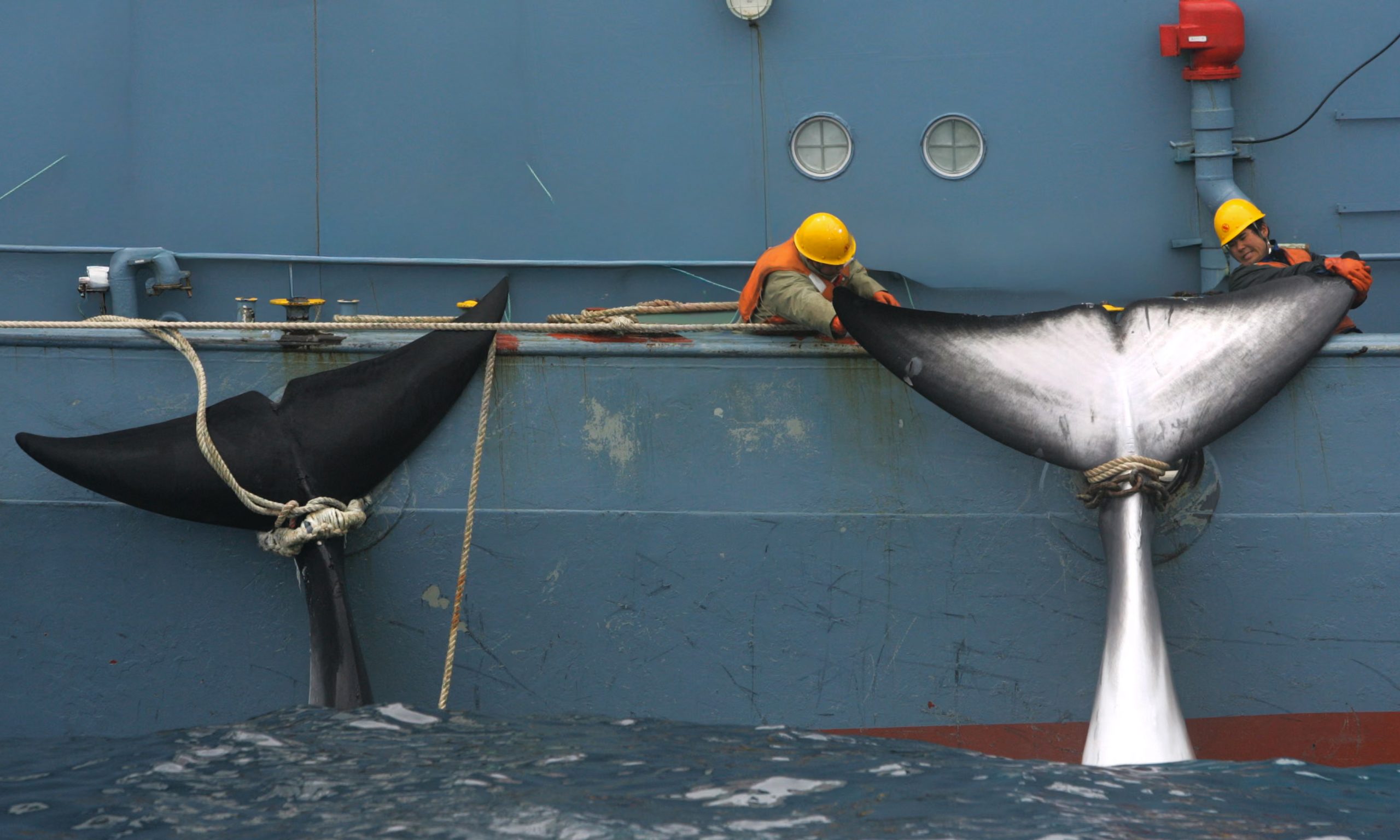
Among the study’s co-authors are Genta Yasunaga and Daiki Sakai, both researchers at Japan’s Institute of Cetacean Research (ICR). Founded by Japan’s Ministry of Agriculture, Forestry and Fisheries in 1987, the ICR’s main goal is to promote the “sustainable use” of whale resources—or, to put it more bluntly, to come up with justifications for pushing global whaling back into business. The ICR is the same organization that designed and ran the infamous Antarctic ‘research’ whaling program, which the International Court of Justice declared illegal in 2014, ruling that it was not science but a cover for harvesting tens of thousands of whales for commercial purposes inside the Southern Ocean Whale Sanctuary.
Deceptive illusions
To get those promising results in mice, the researchers first induced Parkinson’s using a neurotoxin (MPTP) and then administered balenine directly into the brain via the nasal passage. According to the experiment’s findings, the effects of Parkinson’s were reduced by 20 to 30 percent. The problem? The history of Parkinson’s research is full of similar stories—promising results in animals that later failed when tested in humans.
A 2022 paper in Frontiers in Aging Neuroscience notes that over the past two decades, the failure rate for translating Parkinson’s treatments that work in preclinical models (i.e., in other species) into clinical success in human patients has only kept growing. The evidence gets even bleaker when you look at the most promising strategies. In 2024, the journal Brain Sciences published an article stating that despite using animal models to test Parkinson’s therapies, none have succeeded in human trials. Even more recently, in 2025, a review in Neurologic Clinics examining all clinical trials targeting alpha-synuclein (the protein that accumulates in the brains of Parkinson’s patients) concluded that “several trials have been conducted… with disappointing results so far, despite positive preclinical findings.”
The fact is, unlike the Japanese experiment, Parkinson’s disease develops quietly over years or even decades. It also stems from multiple interconnected factors—aging, chronic inflammation, mitochondrial dysfunction, among others—so the mechanisms, timelines, and complexity of the disease simply can’t be compared to an induced condition in mice.
Moreover, for any compound to become a drug for Parkinson’s or any other disease, it has to go through multiple phases: toxicity studies in animal models (preclinical studies), human pharmacokinetic studies (to understand absorption, distribution, metabolism, and excretion), and several later stages of clinical trials in human groups.
By skipping all these steps, the study’s authors claim that balenine could become a new strategy for preventing Parkinson’s or stopping its progression. That’s nothing more than a premature and irresponsible statement—one that ignores the millions of people living with the disease, who see headlines like this as a glimmer of hope that, as we’ve seen, is almost certainly doomed to fail.
The real target: Australia
Even though Japan withdrew from the International Whaling Commission (IWC) in 2019 and resumed commercial whaling in its territorial waters, its goal of ending the global moratorium and restarting whaling on the high seas remains unchanged. To get there, it needs a powerful story that frames whales as a vital resource for human health. And the balenine–Parkinson study could serve that strategy perfectly.
It’s no accident that the publication of these results follows the event orchestrated in September 2025 by the Japan Whaling Association, which presented balenine as the “marine vitamin.” Nor is it a coincidence that this new study comes out just three months before the next annual IWC meeting in Hobart, Australia.
Because even though Japan is no longer an IWC member, it still sends a sizeable delegation to the annual meetings, where it aggressively pursues its harpoon diplomacy. So don’t be surprised if this study’s results are used this October to argue that whaling can help cure neurodegenerative diseases in humans. It’s a propaganda trap for Parkinson’s patients and their families—one we need to call out.
What the whaling industry isn’t telling you
If balenine’s effects were really as promising as the study claims, the news coverage might also mention that this compound isn’t unique to whales—it’s found in other marine and land animals as well.
What’s more, a growing body of scientific evidence shows that products from whales and other cetaceans are heavily contaminated with mercury, polychlorinated biphenyls (PCBs), and other bioaccumulative toxins. Regular consumption leads to serious illnesses and even neurological damage—the exact opposite of what the balenine researchers are aiming for.
It’s clear that both Japan’s whaling industry and its government conveniently leave out these facts. Their goal isn’t to cure Parkinson’s or improve human health with the so-called “marine vitamin.” It’s to secure their strategic and geopolitical interests, especially in the Southern Hemisphere and the Southern Ocean, by eliminating the global moratorium and reopening commercial whaling in international waters.