




Elsa Cabrera, Executive Director of the Cetacean Conservation Center
February 15th will be no ordinary day on the environmental calendar. On this date, we celebrate International Whale Day, which this year carries profound historical significance. It coincides with the 80th anniversary of the International Whaling Commission (IWC) and the 40th anniversary of the adoption of the global moratorium on commercial whaling. This conservation measure, widely recognized as the most effective in the history of international environmental law, prevented the extinction of the planet’s largest living beings. Yet, four decades later, as some whale populations slowly recover, an urgent question echoes from the ocean depths: must we save the whales once again?
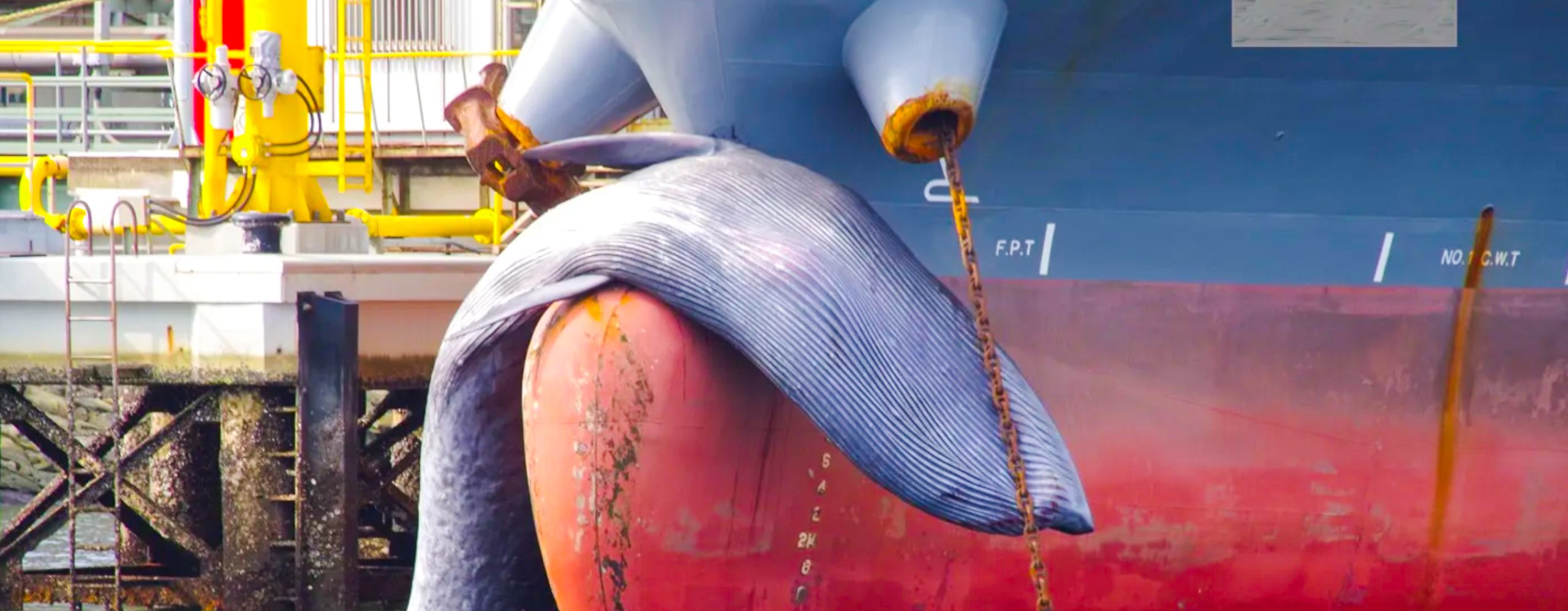
Today, the primary threat is no longer the harpoon, but the ship’s bow. Collisions with vessels, known as ship strikes, now rank among the leading causes of human-induced mortality for large cetaceans worldwide. According to a report by Friends of the Sea, an estimated 20,000 whales die annually from such strikes. While the moratorium has served as a beacon of hope for species decimated by 20th-century commercial whaling, the dramatic increase in maritime traffic has transformed the whales’ ancient migratory routes into lethal highways.
Chile’s fatal leadership and the plight of a unique whale population
Within this grim global picture, Chile occupies a particularly alarming position. A 2025 study published in Marine Policy reveals that Chile leads the world in reported whale deaths from ship collisions. This dire statistic not only threatens the recovery of iconic species like the blue whale (Balaenoptera musculus) but also jeopardizes the Southeast Pacific population of the southern right whale (Eubalaena australis), one of the world’s most endangered whale populations.
Far from being an extension of other southern hemisphere populations, genetic evidence confirms these whales are unique—a distinct lineage inhabiting the rich yet threatened ecosystems of the Humboldt Current. Their situation is critical, with an estimated population of only 50 mature individuals. Every human-caused death is not merely a tragedy but a potentially irreversible blow to the genetic viability and recovery of this population. Alarmingly, data collected in Chile on mortalities and strandings of this species are directly linked to fishing interactions or vessel collisions. Despite legal protections, the future of Chile and Peru’s right whales could vanish beneath the nets, propellers, and hulls of maritime commerce.
The science of risks and technological solutions
The physics of a collision between a large vessel and a whale is unforgiving. A 2022 study indicates that at a speed of 10 knots, a whale has a 50% chance of a fatal strike. At 15 knots, that probability soars to 90%. This problem intensifies in zones of high oceanic productivity, where shipping lanes overlap with critical cetacean feeding, migration, or breeding grounds. A 2019 scientific publication asserts that a mere 10% reduction in the speed of the global fleet could reduce the risk of whale collisions by 50%, simultaneously helping to reduce greenhouse gas emissions and underwater noise pollution.
Both the scientific community and civil society conservation organizations have developed a suite of technologies to mitigate this threat. Real-time acoustic monitoring systems, such as buoy-mounted hydrophones, can detect whale songs and alert nearby vessels of their presence. Others employ artificial intelligence models to predict whale occurrences based on oceanographic conditions and acoustic data, providing near real-time information to shipping companies. Even route-planning tools like the World Shipping Council’s Whale Chart aim to inform captains of high-risk zones along major global shipping routes.
However, the Achilles’ heel of these initiatives is their voluntary nature. A vessel can perfectly ignore a speed reduction alerts or choose not to deviate a few miles if no regulatory framework compels it. The effectiveness of these technologies rests on the goodwill and economic priorities of individual shipping companies—a highly unreliable factor considering the global market’s relentless drive for accelerated logistics.
The regulatory imperative
The core of the current debate is now clear. Science unequivocally demonstrates that the most effective solution is regulation – combining mandatory speed reductions and seasonal rerouting of vessels in high-collision risk areas. A 2024 investigation by the British Antarctic Survey suggests that implementing management measures in just an additional 2.6% of the ocean’s surface could dramatically reduce collision risks in sensitive whale habitats. Another study published in Frontiers in Marine Science confirms that Marine Protected Areas and mandatory speed reduction zones are crucial tools for mitigating this severe threat to whale conservation.
Resistance to such regulations is often framed in economic terms, citing factors like increased transit time and fuel consumption. These arguments ignore the intrinsic value of living whales as ecosystem engineers, whose role in the carbon cycle and fishery productivity is immeasurable. A revealing study published on January 22nd by the United Nations Environment Programme (UNEP) places this cost in a staggering global perspective. The report, titled The State of Finance for Nature 2026, disclosed that for every dollar invested in conserving nature, 30 dollars are spent on subsidies and “development” projects that destroy it. The report exposes an inconvenient truth: the real cost to planetary and human well-being is not protection, but inaction.
Organizations like the International Fund for Animal Welfare (IFAW) have presented concrete proposals to transform recommendations into binding norms. These include mandatory speed reductions, the creation of exclusion zones—or permanent/seasonal rerouting—in critical whale habitats, and the establishment of independent monitoring and enforcement systems.
In the face of such proposals, industry-led initiatives like that of the World Shipping Council, however well-intentioned, risk becoming mere “whale-washing”exercises if not accompanied by a firm corporate commitment to adopt real operational changes and support binding regulations. Given that a shipping company’s ultimate purpose is economic, not environmental, a legal framework must ensure that protection is an obligation, not an option.
Chile at a crossroads
For Chile, the evidence is clear and urgent. Being the country with the highest reported number of ship-srtikes deaths while hosting one of the world’s most endangered whale populations constitutes an unavoidable call to action.
The path forward requires decisive progress toward adopting specific regulations, both nationally through the Chilean Navy and competent maritime authorities, and globally through the International Maritime Organization.
On the 80th anniversary of the IWC and the 40th of the global whaling moratorium, whale conservation faces a new test. The moratorium saved whales from harpoons so they can recover, not so they could fall victim to ship bows.
Our task today must be to effectively regulate the shipping industry to prevent the deaths of tens of thousands of whales annually. The fate of the Southeast Pacific right whale and other species still struggling to recover from commercial whaling depends on our timely action. The technology exists, and science has charted the course. All that is required is the political will to transform currently voluntary codes of conduct into laws and regulations that significantly reduce the threat ship strikes pose to the future of whales.
Forty years after the moratorium, the next stage in whale conservation must cease to be voluntary. It must be regulatory. And it must be now.